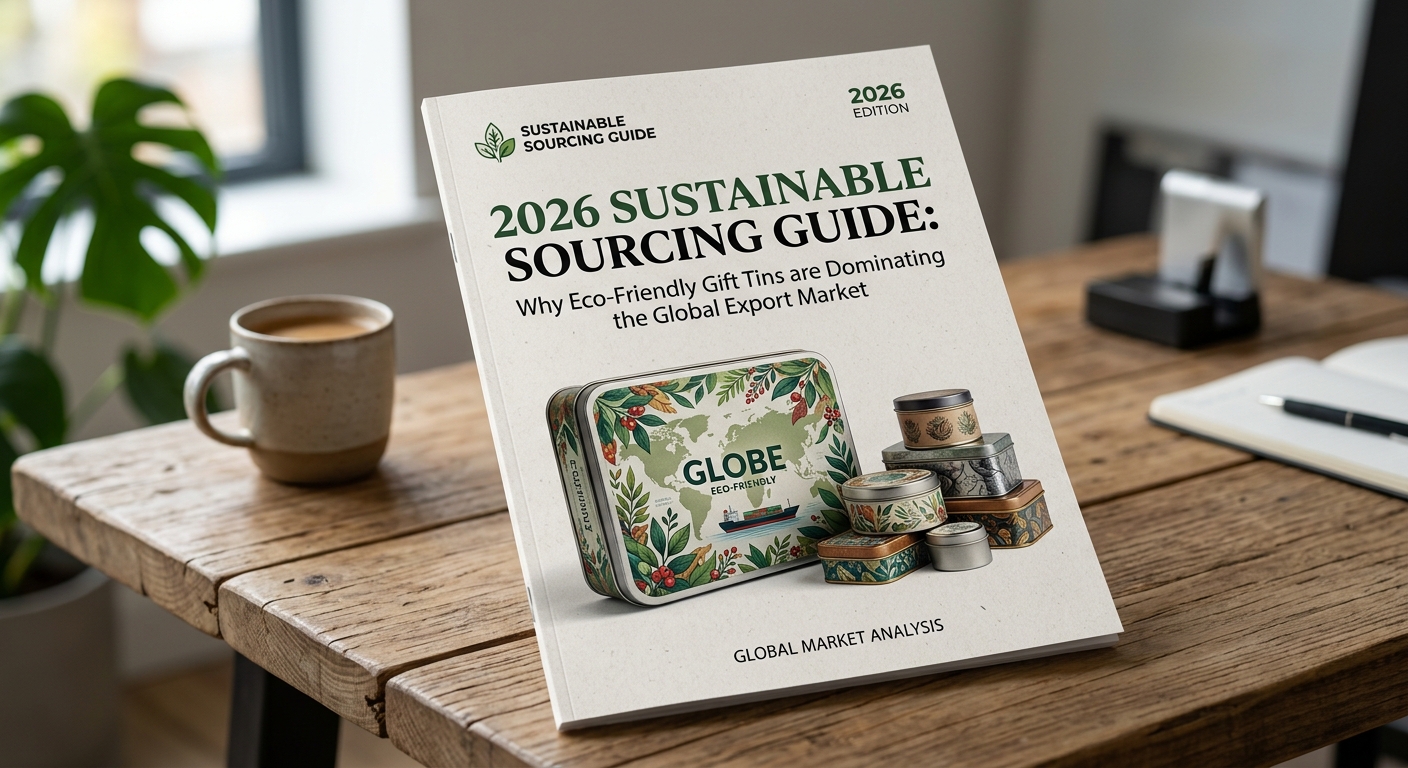
2026 Sustainable Sourcing Guide: Why Eco-Friendly Gift Tins are Dominating the Global Export Market
As of April 2026, the global packaging industry has reached a tipping point. This guide analyzes why sustainable gift tins are the preferred choice for international brands facing strict carbon-neutral regulations and why metal packaging is the cornerstone of the 2026 circular economy.
2026 Sustainable Sourcing Guide: The Rise of Eco-Friendly Gift Tins
As we navigate the second quarter of 2026, the global export market has undergone a fundamental transformation. Sustainability is no longer a luxury branding choice but a mandatory operational requirement. Among all packaging formats, Eco-Friendly Gift Tins have emerged as the dominant force in the high-end retail and gift sectors.
The 2026 Market Shift: Why Metal Over Plastic?
By April 2026, international trade regulations regarding single-use plastics have tightened significantly across the European Union, North America, and the emerging Asian Green Bloc. Metal packaging, specifically tinplate, has seen a 40% increase in market share since the beginning of the year due to its infinite recyclability.
1. Infinite Recyclability and the Circular Economy
In the current 2026 landscape, ‘Circular Design’ is the industry gold standard. Unlike bioplastics which often require specific industrial composting conditions, gift tins are permanent materials. They can be recycled repeatedly without loss of quality, aligning perfectly with the 2026 Global Zero-Waste Initiative.
2. Carbon Border Adjustment Mechanism (CBAM) Compliance
For exporters shipping to Europe in 2026, carbon footprints are scrutinized more than ever. Modern tin production facilities have integrated hydrogen-based smelting and 100% renewable energy grids. Choosing these sustainable tins allows brands to significantly lower their carbon tax liabilities at the border.
Key Design Trends in 2026
The aesthetic of sustainability has evolved. This year, we are seeing three major trends in gift tin manufacturing:
- Minimalist Embossing: Reducing the use of chemical inks by using structural design to create brand logos and textures.
- Smart Packaging Integration: Gift tins equipped with NFC tags or laser-etched QR codes that provide consumers with the product’s digital ‘Carbon Passport’ and recycling instructions.
- Multi-Purpose Utility: Designing tins that are intended for secondary use in the home, extending the lifecycle of the packaging indefinitely.
Comparative Analysis: 2026 Packaging Standards
| Feature | Standard Gift Tins (2026) | Traditional Paperboard | Bio-Plastics (2026) |
|---|---|---|---|
| Durability | High (Reusable) | Low | Medium |
| Recycling Infrastructure | Universal / Efficient | High | Limited / Emerging |
| Premium Perception | Highest | Medium | Low |
| 2026 Carbon Rating | Neutral / Positive | Neutral | Variable |
Sourcing Strategy for Global Buyers
To remain competitive in the latter half of 2026 and into 2027, procurement officers should focus on the following:
- Verify Green Certifications: Ensure suppliers hold the 2026 ISO-Sustain Gold Standard.
- Material Origin: Prioritize tins made from 70% or higher post-consumer recycled (PCR) content.
- Logistics Efficiency: Opt for ‘flat-shipped’ or nesting designs to reduce shipping volume and associated transport emissions.
Conclusion
The 2026 Global Export Market rewards brands that invest in longevity. Eco-friendly gift tins represent the perfect intersection of luxury, protection, and environmental responsibility. As we move further into this decade, the brands that dominate the shelves will be those that replaced disposable waste with durable, beautiful, and infinitely recyclable metal solutions.