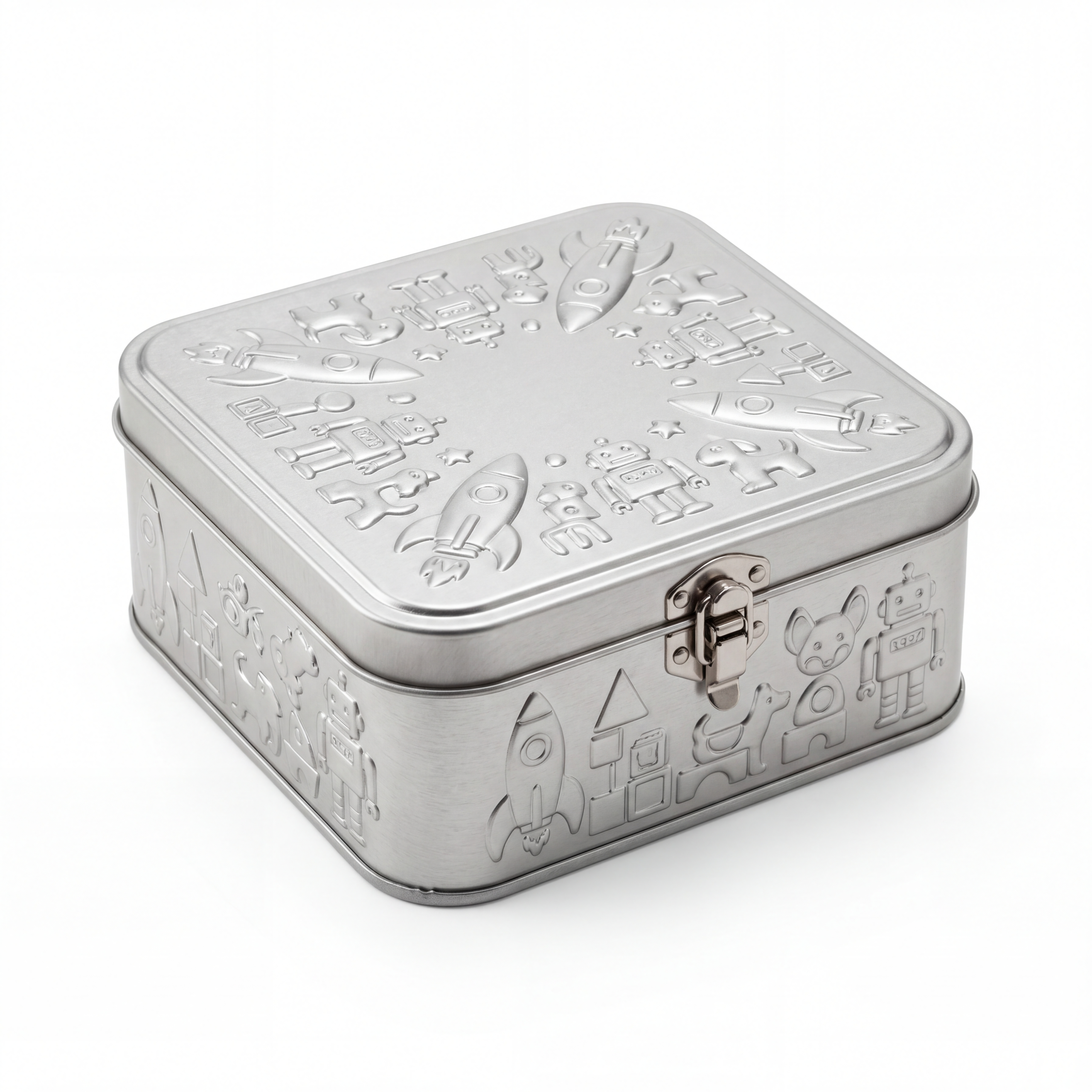
Beyond Recyclability: How Tactile-Finish Embossed Tin Cases are Defining the Premium ‘Unboxing’ Experience for Global Toy Brands
In 2026, premium toy brands are redefining the unboxing experience using tactile-finish embossed tin cases. Moving beyond simple recyclability, these cases leverage sub-micron embossing and advanced tactile coatings to engage the consumer’s senses. This deep dive explores the technical specifications, manufacturing innovations, and psychological impact of metal packaging in the modern toy industry, highlighting how 3D textures and acoustic engineering enhance brand value and sustainability.
[Product Introduction]
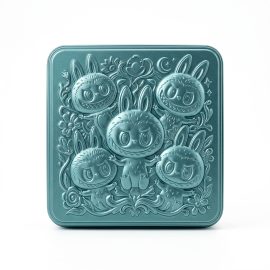
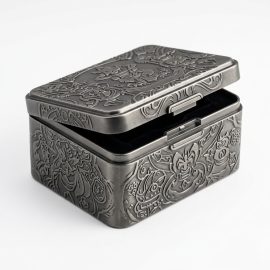
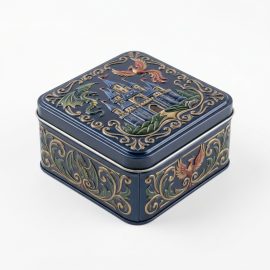
In the competitive landscape of the 2026 global toy market, the concept of luxury has transitioned from visual opulence to multi-sensory engagement. As leading international brands move beyond basic sustainability metrics, the tactile-finish embossed tin case has emerged as the definitive standard for premium packaging. These are not merely containers; they are engineered brand assets that combine sub-micron precision embossing with advanced polymer coatings to create a physical narrative the moment a consumer touches the product. Our 2026 lineup of tactile-finish tin cases represents the pinnacle of this evolution, offering toy manufacturers a sophisticated canvas that enhances perceived value, ensures long-term collectible durability, and fulfills the most stringent carbon-neutral requirements of the modern era.
[Core Specifications]
| Feature | Technical Specification (2026 Standard) |
|---|---|
| Material Composition | Ultra-Pure Grade A Electrolytic Tinplate (ETP) |
| Thickness Range | 0.21mm to 0.38mm (High-Tensile Variant) |
| Embossing Depth | 0.1mm – 0.8mm (Multi-Level 3D Relief) |
| Tactile Coatings | Soft-Touch Matte, Sand-Grain, Leather-Texture, or Pearlized Gloss |
| Printing Technology | 8-Color High-Definition Nano-Ink Digital Offset |
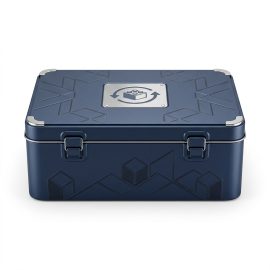
| Lid Mechanism | Acoustic-Optimized Step-Lid or Flush-Fit Friction Lid |
| Safety Standards | EN71-3:2026 Compliant, BPA-Free, Food-Grade Internal Coating |
| Eco-Certification | 100% Recyclable / Carbon-Zero Production Verified |
[Product Advantages]
- Multi-Sensory Brand Reinforcement: The integration of 3D embossing and specific tactile finishes creates a unique physical ‘signature’ for the brand, significantly increasing memory retention among consumers compared to flat cardboard packaging.
- Superior Structural Integrity: Engineered with reinforced edges and high-tensile tinplate, these cases protect delicate internal components—such as smart chips or articulated joints in high-end action figures—far better than traditional materials.
- Sustainable Collectibility: Unlike single-use plastics, these tin cases are designed to be kept. In 2026, the ‘secondary life’ of packaging is a key KPI for global brands, and these cases often serve as permanent storage for toy collections.
- Advanced Acoustic Engineering: The specific gauge of the metal and the precision of the lid-fit are calibrated to produce a satisfying ‘click’ or ‘hiss’ upon opening, a critical component of the premium ‘unboxing’ ritual.
- Counterfeit Deterrence: Complex, multi-level micro-embossing is difficult to replicate with low-cost manufacturing equipment, providing an inherent layer of brand protection in the global marketplace.
- Enhanced Shelf Appeal: The way light interacts with metallic surfaces combined with matte tactile coatings creates a high-contrast visual effect that captures consumer attention in both physical retail and high-definition digital storefronts.
[Application Scenarios]
The application of tactile-finish embossed tin cases spans several high-growth segments of the toy and hobby industry in 2026. For Limited Edition Designer Toys, these cases provide the necessary ‘heft’ and premium feel that justifies a collector-tier price point. In the Educational & STEM Kits sector, the durability of tin ensures that the packaging can survive years of active use as a storage bin for small parts and sensors.
Furthermore, High-End Board Games and Card Games utilize custom-shaped tins to store premium metal game pieces or holographic cards, where the interior can be fitted with bio-based molded pulp inserts for a total plastic-free solution. Even in the Traditional Plush & Doll market, embossed tins are being used for ‘blind box’ luxury accessories, where the element of surprise is heightened by the sensory experience of the packaging itself.
The Technical Evolution of Tinplate in 2026
As we navigate through 2026, the metallurgical standards for tin packaging have reached unprecedented levels. The ‘Grade A’ tinplate we utilize undergoes a process of continuous annealing that allows for deeper draws and more complex embossing patterns without the risk of metal fatigue or micro-cracking. This is essential for the intricate character designs requested by modern toy franchises, where every detail of a character’s armor or texture must be rendered in three dimensions on the surface of the tin.
The coating technology has also seen a paradigm shift. The 2026 generation of tactile finishes uses bio-based resins derived from sustainable sources, providing a ‘soft-touch’ feel that mimics the texture of skin or high-end fabric. This level of sophistication transforms the packaging from a protective shell into a tactile extension of the toy itself, bridging the gap between the product and the consumer’s first interaction.
The Psychology of the ‘Unboxing’ Ritual
Marketing data from early 2026 indicates that the ‘unboxing’ experience accounts for up to 40% of the initial consumer satisfaction rating for premium toys. The weight of the tin case provides an immediate perception of quality—a psychological trigger known as ‘haptic perception.’ When a consumer feels the raised edges of an embossed logo and the smooth, cool surface of the metal, their brain registers the item as high-value before the lid is even removed.
The acoustic profile of the case is equally important. By adjusting the friction coefficients of the inner neck of the tin, we can control the sound produced during opening. A slow, vacuum-sealed ‘hiss’ suggests precision engineering, while a firm ‘snap’ suggests security and durability. These micro-interactions are what define a global toy brand’s premium status in the 2026 economy.
Sustainability and the Circular Economy
In 2026, recyclability is the baseline, not the goal. The true value lies in the circularity of the material. Tinplate remains the most recycled packaging material globally, but its real advantage in the toy industry is its ‘infinite life.’ Unlike paper or plastic, which degrade after several recycling cycles, tin maintains its molecular integrity forever. Our manufacturing processes in 2026 have moved to a closed-loop system where scrap from the embossing process is immediately reclaimed and returned to the foundry, ensuring that the carbon footprint per unit is lower than almost any other premium packaging alternative.
Moreover, the trend of ‘packaging as product’ is at its peak. Toy brands are now designing their embossed tins with secondary functions in mind—perhaps as a display stand, a secret vault for kids, or a stackable modular storage system. This extends the brand’s presence in the consumer’s home long after the initial purchase, providing a continuous touchpoint for brand loyalty.