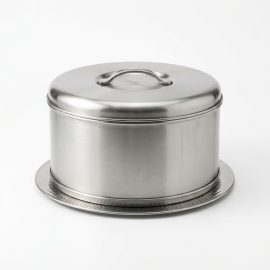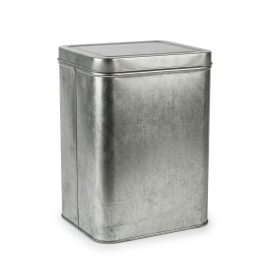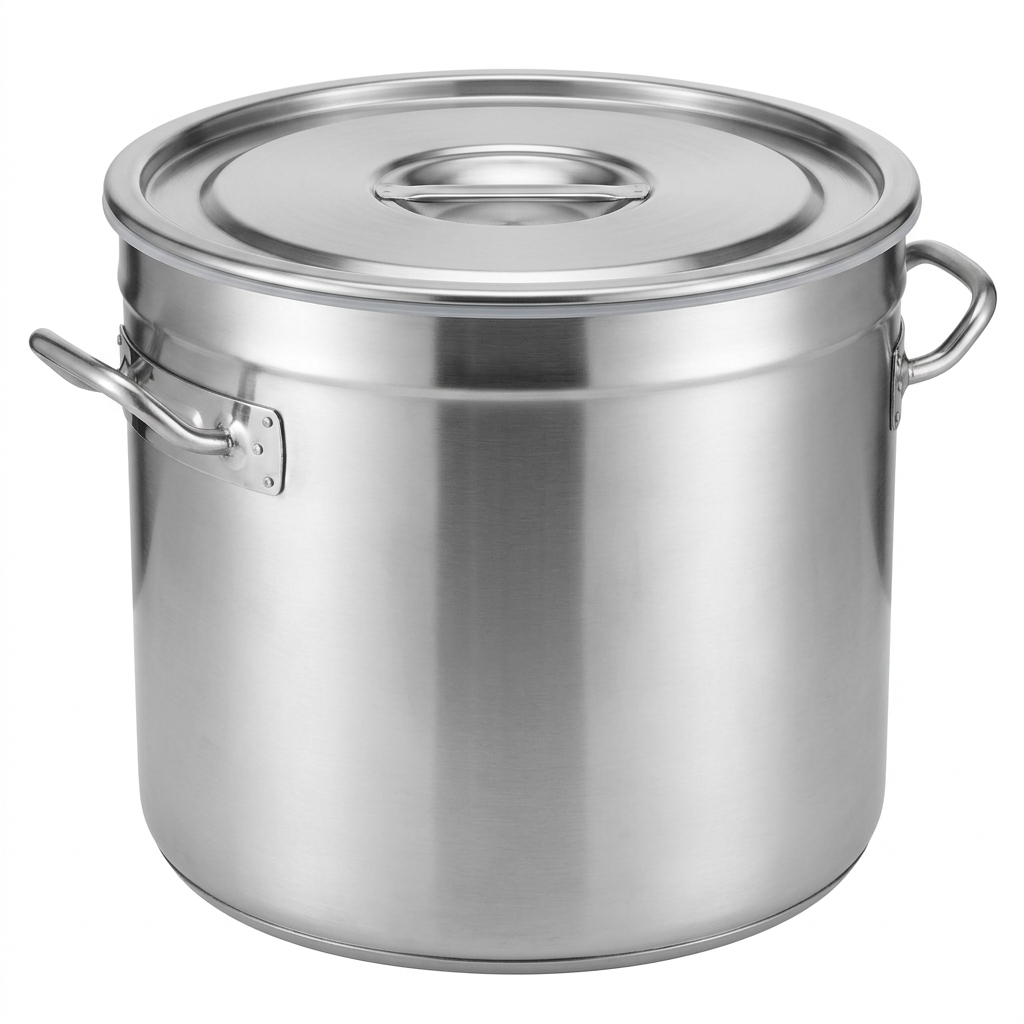
Rust-Free & Crush-Proof: The Ultimate Spec Guide to Sourcing Extra Large Storage Tins for Bulk Goods
Discover the engineering behind extra-large industrial storage tins. This comprehensive technical guide covers Grade ETP tinplate, advanced chrome-free passivation, and reinforced bead geometry designed to prevent rust and crushing in bulk logistics. Ideal for B2B procurement managers seeking durable, food-grade, and 100% recyclable bulk packaging solutions.
[Product Introduction] The Advanced Engineering of Industrial Bulk Tinware
In the global logistics and industrial warehousing landscape of 2026, packaging integrity is paramount. Businesses dealing with bulk commodities face twin threats: oxidative degradation from rust and mechanical failure due to crushing under extreme vertical loads. Traditional packaging materials like high-density polyethylene (HDPE) and standard corrugated boxes struggle with chemical migration, environmental microplastics regulations, and structural flexing under high heat and humidity. To address these vulnerabilities, our premium line of Extra Large Storage Tins for Bulk Goods offers a robust, technically superior, and 100% circular metal packaging solution.
Engineered from high-grade Electrolytic Tinplate (ETP) and treated with cutting-edge, environmentally compliant passivation coatings, these extra-large canisters are specifically designed to maintain product purity. They provide a barrier that is completely impervious to light, oxygen, water vapor, and pests. By utilizing a reinforced profile with strategic radial beadings and heavy-gauge steel, these tins guarantee exceptional structural rigidity. This allows industrial operators to stack products vertically with confidence, optimizing warehouse footprint and minimizing the risk of costly spillage or cross-contamination during transit.
[Core Specifications] Technical Data & Mechanical Performance
For B2B procurement managers, quality assurance directors, and supply chain engineers, material composition and mechanical tolerances are critical. The table below outlines the precise technical parameters governing the design and manufacture of our industrial-grade storage tins, compliant with 2026 international packaging and transport standards.
| Parameter | Technical Specification / Value | Testing Standard / Compliance |
|---|---|---|
| Material Grade | Electrolytic Tinplate (ETP), Single/Double Reduced (SR/DR) Steel | ASTM A623 / EN 10202 |
| Steel Temper | T3, T4, or DR8 (depending on size and strength requirements) | HR30T Hardness Scale |
| Material Thickness | 0.38 mm to 0.52 mm (heavy-duty industrial gauge) | Micrometer Verification (tolerance ± 0.01 mm) |
| Tin Coating Weight | E 2.8/2.8 g/m² up to D 5.6/5.6 g/m² (differential coating available) | ISO 11949 Wet Chemical Method |
| Passivation Treatment | Chrome-free (CF) passivation (Eco-friendly, chemical-resistant) | REACH 2026 Regulatory Compliant |
| Internal Coating (Lacquer) | BPA-free Epoxy-phenolic / Organosol / Polyester lining | FDA Title 21 CFR 175.300 & EU Regulation 10/2011 |
| Volume Capacities | 20 Liters, 50 Liters, 75 Liters, 100 Liters (customized heights available) | Volumetric displacement check |
| Vertical Crush Resistance | Up to 380 kg static load capacity per tin (based on 50L variant) | ASTM D642 Compression Testing |
| Sealing Gasket Options | Food-grade EPDM, Neoprene, or High-performance Silicone | FDA / USP Class VI |
| Closure Mechanisms | Lever-lock ring system with security seal tab, or Heavy lug lid | Drop-test certified closures |
[Product Advantages] Engineering Innovations for Extreme Durability
Our extra-large storage tins are not mere containers; they are highly engineered protective systems designed to endure harsh industrial handling and hostile environmental conditions. Below are the key technological advantages built into every tin:
- Rust-Free Metallurgy with Chrome-Free Passivation: The primary failure point of low-cost metal packaging is corrosion. Our ETP tins undergo a modern, environmentally sound passivation process that creates an inorganic barrier layer. This layer prevents oxidation under high-humidity environments, keeping the tinplate clean and rust-free even when exposed to marine shipping conditions or condensation in unconditioned warehouses.
- Crush-Proof Radial Bead Geometry: To prevent buckling under compression, the tin bodies feature deep-drawn radial beads. These structural indentations act as load-bearing arches along the vertical axis of the tin, increasing the top-load strength by up to 45% compared to smooth-walled metal containers. This enables high-density vertical stacking without the risk of sidewall collapse.
- Advanced Hermetic Sealing System: Equipped with a heavy-duty, zinc-plated steel lever-lock ring and a precision-profiled internal elastomer gasket, these tins create a truly airtight barrier. This hermetic seal blocks all gaseous exchange, ensuring that sensitive bulk powders, food ingredients, and chemical formulations remain free from ambient moisture ingress and oxidative spoilage.
- BPA-Free, Chemically Inert Linings: Depending on your specific bulk cargo, we apply specialized internal lacquers. Our gold epoxy-phenolic lining offers exceptional resistance to acidic, alkaline, or fatty products, preventing chemical reactions between the steel substrate and your valuable materials. All coatings are certified free of bisphenols and comply with the latest global health standards.
- Zero-Flex Double-Seamed Bottoms: The bottom-to-body joint is executed via a high-precision, five-fold mechanical double-seaming process with an injected sealing compound. This eliminates weld lines at the base, creating a seamless, leak-proof bottom that easily resists high hydrostatic pressures from heavy powders and viscous bulk fluids.
- Designed for Palletization & Circular Logistics: The dimensions of our extra-large tins are optimized to fit standard Euro-pallets and US industrial pallets with minimal dead space. Furthermore, steel is recognized as the world's most recycled industrial packaging material; these tins can be repeatedly recycled or sanitized and refilled, aligning perfectly with corporate sustainability goals.
[Application Scenarios] Where Integrity and Scale Meet
Due to their heavy-duty structural properties and pristine protective environments, these extra-large tins are utilized across a diverse range of demanding industries where product failure is not an option.
1. Bulk Food Ingredients & Nutritional Powders
In the food processing industry, protecting bulk ingredients from ambient moisture, infestation, and light degradation is crucial. Products such as dehydrated dairy powders, freeze-dried active cultures, bulk spices, powdered nutraceuticals, and high-fat cocoa derivatives are highly sensitive to rancidity and clumping. The hermetically sealed, light-proof environment inside our ETP tins maintains sensory qualities and biochemical stability over long storage horizons. The smooth internal lacquering ensures easy sanitization and complete discharge of dry powders without product retention.
2. High-Purity Chemical & Pharmaceutical Precursors
Chemical manufacturers handling dry pharmaceutical ingredients, catalysts, fine pigments, and specialty polymers require robust packaging that prevents chemical contamination. The inert coatings applied to our tins ensure that the packaged material remains pure and free from metallic trace contaminants. The crush-proof nature of these heavy-duty tins is also a major safety feature, preventing accidental spillages of volatile or hazardous dry chemicals during rough forklift transport and containerized sea voyages.
3. Premium Agricultural Commodities
Green coffee beans, premium loose-leaf tea, cocoa beans, and high-value oilseeds are often shipped across continents under extreme climatic shifts. When passing through tropical shipping routes, standard soft packaging suffers from "container sweat," leading to mold and fermentation. Our rust-free, heavy-tinplate containers insulate the cargo from moisture shifts, keeping internal Relative Humidity (RH) levels constant and preserving the complex aromatic profiles of specialty agricultural products.
4. Precision Engineering Components & Aerospace Spares
It is not only powders and foods that require protection; precision metal parts, bearing assemblies, aerospace spares, and sensitive electronic assemblies must be kept free from corrosive elements. Shipping these high-value parts in our airtight, rust-free tins with desiccants completely eliminates the risk of oxidation and physical damage. The crush-resistant outer shell protects delicate components from physical shocks and heavy vibrations encountered in high-impact logistics chains.
Deep Sourcing Insights: Selecting the Right Tinplate Specifications
When sourcing extra-large storage tins for B2B operations, relying purely on visual design is a common pitfall. Procurement departments must focus on the mechanical science behind the packaging. For instance, selecting the correct steel temper is a balance between malleability and strength. For very large 100-liter tins, a Double Reduced (DR) steel variant is often preferred because it offers higher yield strength at lower gauges, enabling a lighter container weight without compromising vertical crush resistance.
Furthermore, understanding the difference between hot-dipped and electrolytic tinplate is crucial. Electrolytic deposition (ETP) ensures an incredibly uniform layer of pure tin over the cold-rolled steel sheet, measured in grams per square meter (g/m²). For dry bulk goods stored in climate-controlled environments, a standard 2.8/2.8 g/m² tin coating is highly effective. However, for trans-oceanic shipping or outdoor storage where condensation and salt spray are present, sourcing differential coatings (e.g., 5.6/2.8 g/m², where the heavier coating is applied to the exterior) offers superior corrosion resistance while remaining cost-effective.
Finally, we encourage global supply chain managers to conduct rigorous drop tests (in accordance with ASTM D5276 standards) and compression tests (ASTM D642) during the supplier audit phase. Ensuring that the lids, locking rings, and seams can withstand physical stress when fully loaded to maximum capacity is the ultimate safeguard against operational downtime and product loss. By prioritizing high-grade raw materials, advanced structural geometry, and strict quality control standards, our extra-large storage tins represent the pinnacle of modern B2B packaging solutions.