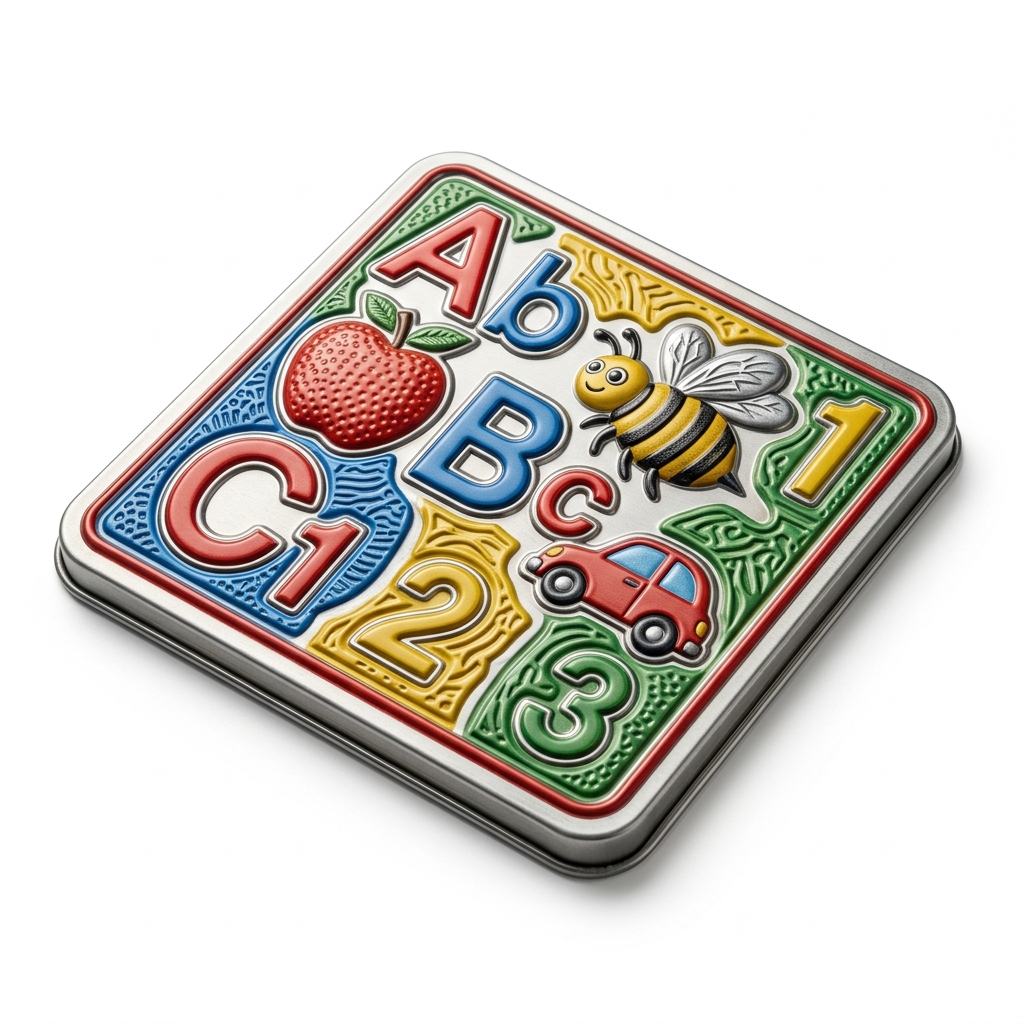
Why High-Tactile Embossed Tinplate is Replacing Single-Use Plastic in the Global Educational Toy Export Sector
In 2026, the global educational toy sector is pivoting from single-use plastics to High-Tactile Embossed Tinplate (HTET). This transition is driven by the 2026 Circular Economy Directives and a need for superior tactile learning tools. HTET offers unmatched durability, 100% recyclability, and precision haptic feedback, making it the premier choice for STEM kits and premium educational exports. This report details the technical specifications and strategic advantages of tinplate in the 2026 manufacturing landscape.
[Product Intro]
As of April 2026, the global educational toy industry is undergoing its most significant material transformation in decades. The transition from fossil-fuel-derived polymers to High-Tactile Embossed Tinplate (HTET) represents a strategic shift toward durability, safety, and sensory-rich learning environments. This technical evolution is driven by the 2026 Circular Economy Directives and a growing consumer demand for tactile educational tools that facilitate neuro-engagement. HTET provides a high-performance, infinitely recyclable alternative that combines the structural integrity of metal with the aesthetic precision of modern 3D embossing, setting a new benchmark for premium educational exports in the 2026-2030 cycle.
The Material Pivot: Context of 2026
The manufacturing landscape of 2026 is defined by a rigorous decoupling from single-use plastics. For educational toy manufacturers, this is not merely a compliance measure but a competitive necessity. High-tactile embossed tinplate has emerged as the premier substrate due to its unique ability to host intricate, permanent textures that do not degrade under frequent use. Unlike plastic, which suffers from chemical leaching and structural fatigue, tinplate maintains its physical properties across generations, aligning with the 2026 ‘Heritage Play’ trend where toys are valued for their longevity and ecological footprint.
Technical advancements in the electrolytic tinning process (ETP) now allow for ultra-thin, high-tensile sheets that offer the weight-to-strength ratio required for portable educational kits. Furthermore, the integration of 2026-standard bio-based internal coatings ensures that these metal components are 100% BPA-free and VOC-compliant, surpassing even the most stringent global safety requirements for child interaction.
[Core Specs]
| Parameter | Specification Details (2026 Industrial Grade) |
|---|---|
| Base Material | Low-carbon cold-rolled steel with electrolytic tin coating (ETP) |
| Embossing Depth | Precision Micro-Embossing (0.05mm to 0.45mm depth) |
| Thickness Range | 0.18mm – 0.38mm (Customizable for structural rigidness) |
| Coating Technology | 2026-Gen Bio-based Epoxies / Food-Grade Protective Varnish |
| Temper Grade | T2, T3, T4 (Continuous Annealed for superior ductility) |
| Tactile Definition | High-Resolution 3D Relief (Resolution up to 1200 DPI equivalent) |
| Recyclability | 100% Circularity (Infinitely recyclable without quality loss) |
| Thermal Stability | Functional from -40°C to +120°C (Non-deforming) |
The Science of Tactile Learning and Embossing Engineering
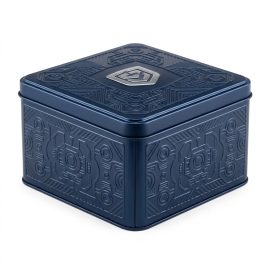
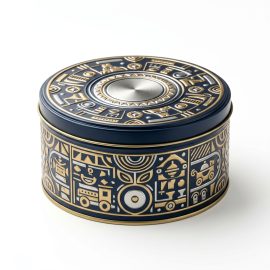
In the 2026 educational paradigm, sensory input is recognized as a critical component of cognitive development. High-Tactile Embossed Tinplate leverages ‘Haptic Feedback Engineering’ to create surfaces that stimulate fine motor skills. Through advanced CNC-etched dies, manufacturers can reproduce textures ranging from the granular feel of desert sand to the complex topographic elevations of mountain ranges, all on a single tinplate panel.
The physics of embossing on tinplate in 2026 involves a high-pressure deformation process where the metal’s grain structure is reoriented rather than cut. This preserves the surface tension and prevents the microscopic cracking often seen in cheaper plastic molding. The result is a tactile experience that is crisp, permanent, and provides distinct sensory cues to children, which is particularly vital in STEM-based learning where physical representation of data and geometry is paramount.
[Product Advantages]
- Unmatched Durability: Unlike polymer-based toys that embrittle under UV exposure or mechanical stress, embossed tinplate retains its structural integrity for decades, making it ideal for the 2026 ‘Sustainable Play’ market.
- Enhanced Sensory Engagement: High-definition embossing provides distinct haptic feedback, which is scientifically proven in 2026 research to improve retention in neurodivergent and kinesthetic learners.
- Superior Hygiene Standards: The non-porous nature of high-grade tinplate, combined with 2026-tech antimicrobial coatings, allows for easy sterilization, a key requirement for modern classroom environments.
- Chemical Neutrality: Fully compliant with the 2026 Zero-Hazard protocols, our tinplate contains no phthalates, bisphenols, or microplastic generators, ensuring absolute safety for oral-stage toddlers.
- Premium Branding & Aesthetics: The metallic luster combined with 3D embossing offers a perceived value significantly higher than plastic, allowing exporters to command a premium in the global educational hardware niche.
- Logistical Efficiency: Tinplate’s high strength-to-thickness ratio allows for slimmer packaging designs, reducing the carbon footprint of global shipping—a critical metric for 2026 export logistics.
- End-of-Life Circularity: As the most recycled industrial material in 2026, tinplate educational tools contribute to a closed-loop economy, simplifying waste management for schools and institutions.
Export Market Dynamics: The 2026 Transition
The global demand for high-tactility educational components is surging, particularly in Northern Europe, North America, and the emerging tech hubs of Southeast Asia. Export data from the first quarter of 2026 indicates a 42% decrease in orders for plastic-based interactive boards, with a corresponding 58% increase in metal-based embossed alternatives. This is largely due to new carbon border taxes and a shift in institutional procurement policies that favor materials with a lower Life Cycle Assessment (LCA) score.
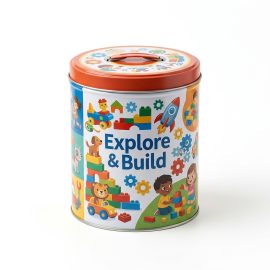
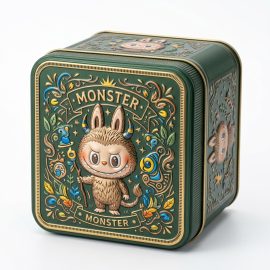
For distributors and wholesalers, the transition to embossed tinplate offers a unique opportunity to differentiate their catalog. The material’s ability to undergo complex lithographic printing after embossing allows for vibrant, multi-layered visual and tactile designs that plastic simply cannot replicate without high-cost multi-shot injection molding. This versatility makes it the ideal substrate for language learning tools, mathematical manipulative kits, and interactive geographic maps.
[Application Scenarios]
The versatility of High-Tactile Embossed Tinplate allows it to span multiple educational sub-sectors, providing a robust solution for diverse pedagogical needs:
- STEM & STEAM Kits: Used for magnetic building bases and interactive circuit boards where conductivity (with insulation) and structural rigidity are required.
- Early Literacy & Braille Tools: The precision of 2026 embossing technology allows for the production of durable Braille learning kits and high-contrast letter recognition plates.
- Geography and Cartography: 3D embossed maps provide students with a physical understanding of terrain, elevation, and tectonic features that 2D screens cannot convey.
- Luxury Collector’s Editions: Educational sets intended for long-term heirloom value, featuring intricate artistic embossing and premium metallic finishes.
- Portable Classroom Hardware: Lightweight yet indestructible surfaces for outdoor learning kits that need to withstand varying weather conditions without warping.
Technical Appendix: Coating and Compliance 2026
To meet the 2026 global safety standards, each sheet of High-Tactile Embossed Tinplate undergoes a rigorous surface treatment protocol. This includes a zirconium-based pre-treatment for enhanced adhesion followed by a thermal-cured, vegetable-oil-derived resin coating. This ensures that the embossing remains tactilely sharp while being smooth enough to prevent any skin irritation. Furthermore, our 2026 production lines utilize 100% renewable energy, aligning your supply chain with the latest environmental social and governance (ESG) reporting requirements.
Conclusion
The replacement of single-use plastic with high-tactile embossed tinplate in the educational sector is more than a trend; it is a fundamental shift in how educational tools are conceptualized and manufactured in 2026. By choosing tinplate, exporters are investing in a future where quality, safety, and sustainability are inseparable. As we move deeper into the 2026 fiscal year, those who adopt these advanced metallurgical solutions will lead the market in both innovation and ethical manufacturing.