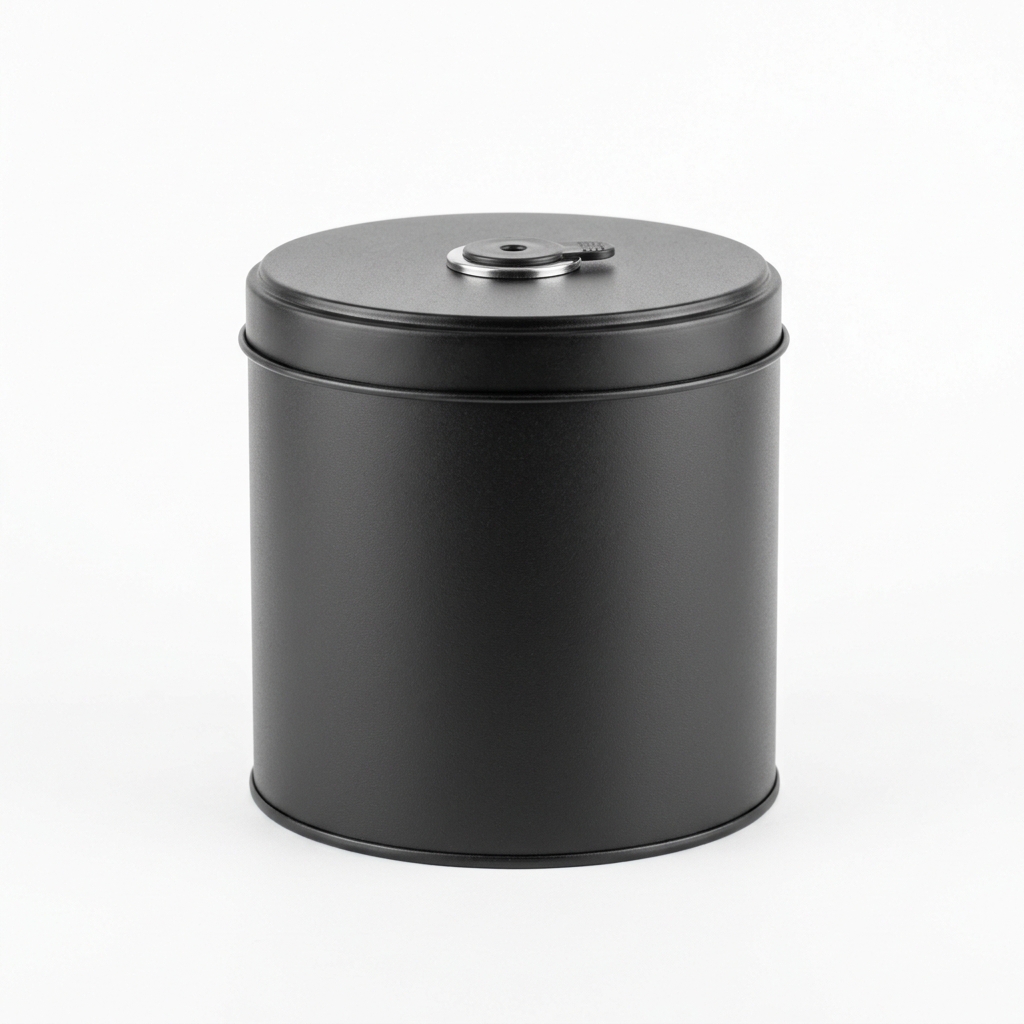
Beyond Basic Packaging: Direct-Sourcing Food-Grade Round Storage Tin Collections for Artisan Coffee Roasters
Discover the ultimate in coffee preservation with our direct-sourced, food-grade round storage tin collections. Engineered for artisan roasters in 2026, these premium tinplate vessels offer absolute hermetic sealing, integrated degassing technology, and total UV protection. Elevate your brand with highly customizable, infinitely recyclable packaging that ensures your specialty beans remain at peak freshness. Learn how transitioning to advanced metal packaging can optimize your supply chain, enhance consumer experience, and meet rigorous global sustainability standards.
[产品简介] Product Introduction
In the highly competitive and nuanced world of artisan coffee roasting in 2026, the vessel that carries your meticulously roasted beans is no longer merely an afterthought; it is a critical extension of your brand identity and a fundamental component in the organoleptic preservation of your product. “Beyond Basic Packaging: Direct-Sourcing Food-Grade Round Storage Tin Collections for Artisan Coffee Roasters” represents a paradigm shift in how specialty coffee is protected, presented, and distributed across the global market. As the specialty coffee sector matures, consumers have grown increasingly sophisticated, demanding transparency, sustainability, and absolute freshness. Standard flexible pouches, while ubiquitous in previous eras, often fall short of delivering the uncompromising barrier properties required to maintain the delicate volatile compounds of single-origin microlots or complex espresso blends over extended shelf lives.
Our direct-sourced food-grade round storage tin collections are engineered precisely to bridge this gap. Manufactured using advanced electrolytic tinplate technology and treated with state-of-the-art bisphenol A non-intent (BPA-NI) interior linings, these storage vessels offer a fortress against the primary enemies of roasted coffee: oxygen, moisture, ultraviolet light, and temperature fluctuations. By bypassing traditional intermediary distribution channels through a direct-sourcing model, we provide roasters with unparalleled access to premium, customizable packaging infrastructures. This collection not only guarantees the structural integrity of the beans during transcontinental shipping but also transforms the unboxing experience into a tactile, premium event that resonates with the modern, environmentally conscious consumer of 2026 and beyond. Welcome to the definitive standard of coffee preservation and brand elevation.
The Material Science of Coffee Preservation
Understanding the critical necessity of advanced packaging requires a deep dive into the chemical degradation processes of roasted coffee. The moment beans are discharged from the cooling tray of a roaster, they begin releasing carbon dioxide—a process known as degassing. Concurrently, the lipid structures within the cellular matrix of the coffee become highly susceptible to lipid oxidation if exposed to atmospheric oxygen. Traditional packaging solutions often struggle to balance the need to release CO2 while simultaneously preventing oxygen ingress. Furthermore, the photodegradation caused by ultraviolet light exposure can rapidly destroy the delicate aromatic esters that define the flavor profile of high-scoring specialty coffees.
Our round storage tins utilize the innate impermeable characteristics of steel. Unlike metallized plastics, which inherently possess microscopic pores that allow for fractional gas exchange over time, tinplate provides an absolute barrier. The hermetic environment created within these tins halts the oxidation process almost entirely when flushed with nitrogen prior to sealing. The robust cylindrical structure inherently resists pressure changes and physical impacts, ensuring that the internal volume remains constant, which is critical for maintaining the equilibrium relative humidity (ERH) around the beans. In the advanced material landscape of 2026, our food-grade tinplate is subjected to rigorous metallurgical testing to ensure zero structural failure even under extreme logistical stressors.
[核心规格] Core Specifications
To meet the exacting demands of industrial and artisan applications alike, our round storage tin collections are manufactured to strict technical tolerances. The following specifications outline the engineering parameters of our premium line:
| Specification Category | Technical Details & Metrics |
|---|---|
| Base Material | Premium Grade Electrolytic Tinplate (ETP), compliant with global 2026 metallurgical standards. |
| Material Thickness | 0.23mm to 0.28mm (customizable based on structural load requirements). |
| Internal Coating | Food-Grade, BPA-NI (Bisphenol A Non-Intent) inert clear or gold lacquer, 100% reactive-free. |
| Degassing Mechanism | Integrated one-way micro-valve technology, precision-calibrated for optimal CO2 release. |
| Sealing Architecture | Double-seam construction with internal plastisol compound for hermetic atmospheric locking. |
| Surface Finishing | High-definition CMYK offset lithography, Pantone matching, matte, gloss, or tactile varnishing. |
| Capacity Options | Standardized volumetric profiles for 250g, 500g, and 1000g whole bean capacities. |
| Compliance & Certification | ISO 22000, updated 2026 FDA Food Contact substance guidelines, EU REACH compliance. |
[产品优势] Product Advantages
Deploying our direct-sourced tinplate packaging solutions provides artisan roasters with significant strategic and operational advantages in the global marketplace. The core benefits include:
- Absolute Hermetic Integrity: The precision-engineered double-seam closure, combined with a proprietary food-grade sealant, ensures an impenetrable barrier against oxygen and moisture transmission, dramatically extending the peak flavor window of roasted coffee.
- Active Degassing Integration: Featuring concealed, one-way degassing valves engineered into the base or lid architecture, the tins safely expel built-up carbon dioxide from freshly roasted beans without allowing ambient air to infiltrate the container.
- Total Photochemical Protection: Unlike glass or translucent plastics, the opaque nature of our tinplate completely blocks ultraviolet and visible light spectrums, entirely preventing the photodegradation of coffee lipids and preserving the beans’ vital aromatic compounds.
- Superior Tactile and Visual Branding: The metallic substrate offers a unique canvas for ultra-high-definition offset lithography, multi-level embossing, and debossing. This allows brands to create a highly tactile, premium visual identity that commands attention on retail shelves.
- Infinitely Recyclable Circularity: In alignment with strict 2026 global sustainability mandates, steel remains the most recycled food packaging material globally. The tins are 100% infinitely recyclable without any loss of structural quality, appealing to environmentally conscious consumers.
- Inert Chemical Stability: The advanced BPA-NI interior lacquers ensure that the metal never comes into direct contact with the coffee. This inert barrier guarantees zero metallic taste transfer, preserving the absolute purity of the coffee’s origin characteristics.
- Logistical Structural Superiority: The cylindrical geometry and high tensile strength of the 0.25mm electrolytic tinplate withstand immense vertical and lateral pressure, eliminating the risk of burst packaging during high-altitude air freight or rough terrestrial transit.
[应用场景] Application Scenarios
Our food-grade round storage tin collections are highly versatile, engineered to serve various critical nodes within the specialty coffee ecosystem. The primary application scenarios include:
Artisan Specialty Roasteries and Flagship Cafés: For roasters producing high-end microlots, Cup of Excellence winning beans, or limited-edition seasonal blends, the presentation must match the pedigree of the product. These tins serve as the ultimate retail packaging, offering customers a premium, reusable vessel that signifies quality. The airtight nature ensures that the beans maintained on the retail shelf are as fresh as the day they were roasted.
Global E-commerce and Subscription Services: As direct-to-consumer digital sales continue to dominate the coffee landscape in 2026, packaging must endure the rigors of individual parcel shipping. The structural durability of the round tin prevents the crushing and puncturing commonly associated with flexible bags, ensuring the product arrives in pristine condition. Furthermore, the uniform dimensions optimize warehouse shelving and automated pick-and-pack logistics.
Commercial Barista Competitions and Professional Training: In environments where absolute consistency is required, such as the World Barista Championship circuits or SCA-certified training laboratories, competitors and educators rely on our tins to transport their curated beans. The hermetic seal and UV protection guarantee that the carefully dialed-in roast profiles remain completely stable, unaffected by the diverse climates of international travel.
Corporate Gifting and Luxury Hospitality: High-end hotels, Michelin-starred restaurants, and luxury corporate gifting programs require aesthetics that align with their brand prestige. The customizable nature of the tinplate—allowing for deep metallic hues and sophisticated embossing—makes these containers ideal for bespoke, private-label coffee programs that demand a luxurious, permanent feel.
The Direct-Sourcing Advantage in Global Trade
The global supply chain landscape of 2026 demands unprecedented efficiency and transparency. Traditional packaging procurement often involved multiple layers of intermediaries, each adding margin and potential communication delays. By adopting a direct-sourcing model for our food-grade tin collections, artisan coffee roasters gain direct access to the manufacturing floor. This streamlined approach leverages integrated B2B digital platforms that provide real-time visibility into production schedules, metallurgical quality control data, and shipping logistics.
Direct sourcing significantly compresses the lead time from initial design concept to final delivery. Roasters can collaborate directly with structural engineers to prototype custom dimensions or specialized lid closures. This direct line of communication ensures that intricate lithographic artwork translates perfectly onto the curved metal surface, maintaining stringent brand guidelines. Furthermore, by removing intermediary warehousing, the carbon footprint associated with the transportation of the empty packaging is considerably reduced, aligning with the stringent corporate social responsibility (CSR) goals mandated by modern enterprise standards.
Advanced Manufacturing and Quality Control
The production of premium food-grade tinplate is a marvel of modern manufacturing. The process begins with cold-rolled steel sheets that undergo continuous annealing to achieve the precise temper required for cylindrical forming without micro-fracturing. These sheets are then subjected to electrolytic tinplating, where a microscopically thin, uniform layer of tin is deposited onto the steel substrate, providing the first line of defense against oxidation.
In our 2026 manufacturing facilities, quality control is governed by artificial intelligence and automated optical inspection (AOI) systems. Every single tin passes through high-speed cameras that detect microscopic surface defects or registration errors in the lithographic printing. The critical double-seam, which secures the base to the cylinder, is evaluated using non-destructive ultrasonic testing to ensure perfect hermeticity. The interior lacquers are cured in precision-controlled thermal ovens, guaranteeing complete polymerization of the BPA-NI coating, thereby ensuring absolute food safety compliance under the most rigorous international standards.
Navigating the Future of Sustainable Packaging
The conversation around packaging in 2026 is inextricably linked to environmental impact. While biodegradable plastics have made strides, their reliance on specific industrial composting facilities often limits their real-world effectiveness. Tinplate, conversely, champions the circular economy. Steel is inherently magnetic, making it incredibly easy to separate in municipal recycling facilities. Consequently, it boasts the highest recycling rate of any packaging material.
Moreover, the inherent durability of the round storage tin encourages a secondary lifecycle in the consumer’s home. Long after the original artisan coffee has been consumed, these beautifully designed vessels are frequently repurposed for household storage, extending their utility and further amortizing their environmental footprint. By choosing direct-sourced, premium tinplate, coffee roasters are not merely purchasing a container; they are investing in a sustainable legacy, reducing single-use waste, and communicating a profound respect for both their product and the planet.